
In remarks titled 'Implement Consensus and Handle Differences Properly to Bring China-India Relations Back on the Right Track' posted on the Chinese embassy website, Sun spoke of disruptions in the bilateral relationship and outlined five steps to clarify 'some fundamental points'.

At a time when China is trying to make its foray into South Asia, India should use its shared history to strengthen its ties in the region, says Dr Rup Narayan Das.

External affairs ministry spokesperson Gopal Baglay said Modi would visit Portugal on June 24, the US on June 25 and 26, and the Netherlands on June 27.
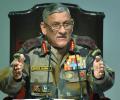
The air defence command is to be rolled out by the beginning of next year and the Peninsula command by the end of 2021, Gen Rawat told a select group of journalists. The Indian Air Force will helm the air defence command and all-long range missiles as well as air defence assets will come under it, he said.

A marginally lower stock of 21.04 million tonnes is to be maintained in the first quarter as on April 1 as against 21.2 million tonnes.

"Had a wonderful meeting with President U Htin Kyaw," Modi tweeted along with some pictures of the meeting.

Describing India as a long-standing strategic partner in fight against terror, Israel has said that it will "not do anything that could undermine India's security" in a strong bid to re-assure New Delhi that reports of arms sale to Pakistan were incorrect.
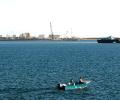
The Chabahar port, located in the Sistan-Balochistan province on the energy-rich Persian Gulf nations southern coast, lies outside the Persian Gulf and can be easily accessed from India's western coast, bypassing Pakistan.

The NSA will meet with officials of the French external intelligence agency to forge a very close counter-terrorism relationship with India, reveals Rajeev Sharma.

This, Singh said, would bring about the necessary integration of country's security and foreign policy for a complete synergy in future conflicts.

This was the first round of talks for Wang after he succeeded State Councillor Yang Jiechi earlier this year.

At a time when tensions are high over the repeated ceasefire violations perpetrated by Pakistan's troops at the Line of Control and China's incursions, Prime Minister Narendra Modi met the country's top military officers at the defence ministry.

Assistant Secretary for South and Central Asian Affairs Nisha Biswal will travel to Bangalore and New Delhi from March 4 to 6

In the first highest level face-to-face contact between the two sides after border tension erupted in eastern Ladakh in early May, Singh and Wei met for two hours and 20 minutes in Moscow on Friday evening on the sidelines of a meeting of the defence ministers of the Shanghai Cooperation Organisation.
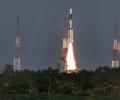
'Two nations would continue to pursue shared interests in space that includes collaboration on safety and security in space'
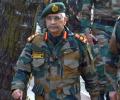
The commanders will also deliberate on the overall situation in Jammu and Kashmir besides delving into issues having national security implications, they said. However, the main focus will be on the situation in eastern Ladakh where Indian and Chinese troops are locked in an eyeball-to-eyeball face-off in Pangong Tso, Galwan Valley, Demchok and Daulat Beg Oldie, the sources said.

Prime Minister Narendra Modi will retain DoPT, Atomic Energy as well as all important policy issues and portfolios not allocated.

The meeting on the sidelines of the Shanghai Cooperation Organisation Summit in Bishkek is their first interaction after Modi's re-election following the stunning victory of the BJP in the general elections last month.
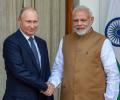
Sources also said that India meets the criteria for a US sanctions waiver for procuring S-400 missile defence systems from Russia and the Trump administration has 'enough flexibility' on the issue.

India cannot afford to adopt any coercive measures against the military even if it disapproves the military takeover, notes Dr Rajaram Panda.

In the first-ever separate resolution on foreign policy brought in its National Executive in Bengaluru, BJP attacked the previous Congress-led Government, saying "a cursory glance at the 'lost decade' of the UPA, reveals retreat and a loss of direction in engaging with neighbours, ham-handed diplomacy vis--vis Pakistan and a blind-spot in our foreign policy to the Indian Ocean island states."
